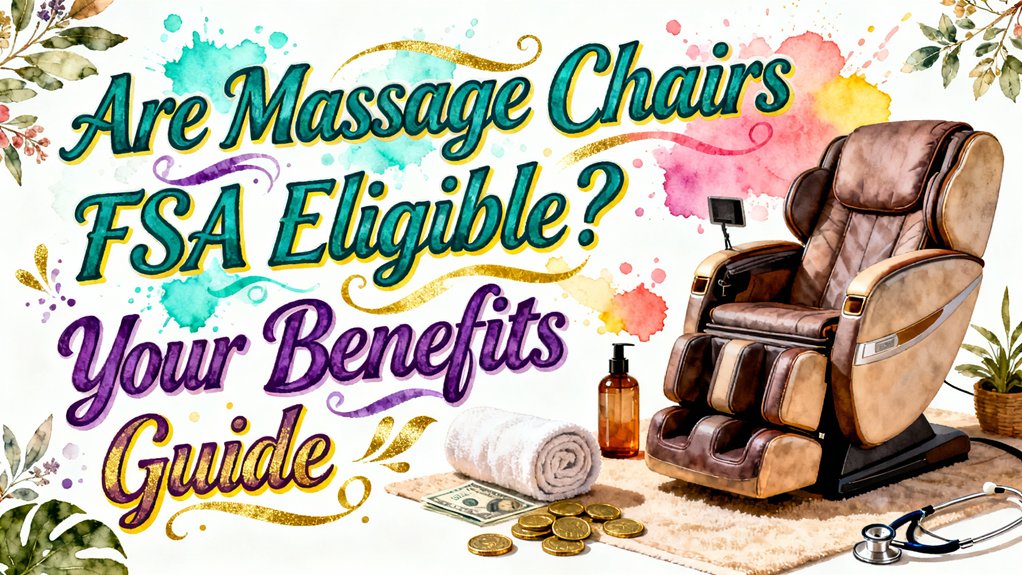
You can claim massage chairs as FSA-eligible medical expenses if you’ve got a Letter of Medical Necessity from your healthcare provider documenting a specific medical condition and the chair’s therapeutic role in treatment. The IRS requires that covered devices serve a medically necessary purpose under IRC Section 213(d)(1), not general wellness. You’ll need to verify your plan’s specific requirements and submit proper documentation to your benefits administrator. Understanding the nuances of eligibility criteria will help you navigate approval successfully.
Understanding FSA and HSA Coverage for Medical Devices
When you’re evaluating whether a massage chair qualifies for reimbursement, you’ll need to understand how Flexible Spending Accounts (FSAs) and Health Savings Accounts (HSAs) determine eligibility. Both accounts cover qualified medical expenses under IRC Section 213(d)(1), but they maintain strict restrictions on covered services. Your FSA or HSA reimburses equipment and devices deemed medically necessary for diagnosis, treatment, or prevention of disease. However, the IRS excludes general wellness items and equipment useful to healthy individuals. Allowable wellness items must serve a specific therapeutic purpose rather than promote general health. Research shows that massage chairs can provide stress reduction and pain relief when used therapeutically, distinguishing them from general wellness equipment. Chair massage therapy targets the neck, shoulders, back, arms, and hands to deliver reduced muscle tension and pain benefits. For optimal therapeutic outcomes, most recommendations suggest using massage chairs 3–4 times per week with sessions lasting 15–20 minutes. Clinical studies demonstrate that massage chairs produce significant reductions in pain scores and improved quality of life for various conditions. You’ll find that covered services require clear medical necessity—typically documented through a Letter of Medical Necessity from a licensed healthcare provider. Unlike fitness club memberships and other general well-being expenses, items with a medical diagnosis may qualify for reimbursement. Understanding these distinctions helps you navigate what your account actually covers versus what falls outside reimbursable expenses.
When Massage Chairs Qualify for Reimbursement
How can you transform a massage chair from an ineligible luxury item into a reimbursable medical expense? You’ll need a Letter of Medical Necessity (LMN) from your healthcare provider documenting your specific medical condition and the chair’s treatment effectiveness for your diagnosis.
Your provider must specify how the equipment maintains your health and outline the recommended duration. Without this documentation, insurers classify massage chairs as luxury items and deny claims outright. Features like heated 4D rollers and advanced massage technology can strengthen your case when they directly address your diagnosed condition. Professional-grade massage chairs designed with multi-layer foam cushioning and ergonomic support can provide additional therapeutic benefits for clients with chronic conditions. The Kyota Yugana M780, for example, includes 24 airbags with 34 air cells for comprehensive air compression massage therapy. Advanced 4D massage chairs use AI-driven body scanning and dynamic rollers that adjust in real-time to deliver consistent depth and targeted relief. Models like the BOSSCARE 4D feature extended SL-track technology that provides precise, smooth, and powerful action along the spine for enhanced therapeutic outcomes.
You’re eligible for reimbursement when you’ve obtained an LMN that establishes medical necessity. Cigna, for example, reimburses massage chair expenses with a documented medical diagnosis. Your FSA or HSA administrator may also allow reimbursement for the excess cost over a standard chair when proper documentation supports equipment maintenance requirements tied to your condition. Different types of massage chairs, such as zero gravity massage chairs, can help relieve back stress by reducing pressure on the spine, which may strengthen your reimbursement case if your condition involves chronic back pain.
Medical Conditions That Support Eligibility
Several medical conditions qualify massage chairs for FSA and HSA reimbursement when you’ve obtained proper documentation from your healthcare provider. Back pain, arthritis, chronic headaches, diabetes, and high blood pressure represent primary conditions supporting massage chair dual eligibility. Each condition qualifies as a massage chair product qualification when you can demonstrate medical necessity through diagnosis.
You’ll need a Letter of Medical Necessity from your provider confirming the therapeutic benefit. Back pain relief targets musculoskeletal tension, while arthritis treatment utilizes shiatsu and Swedish techniques for joint pain management. Chronic headaches respond to muscle relaxation, and hypertension improves through circulation enhancement. Diabetes-related symptoms also qualify for reimbursement with appropriate medical documentation. These therapeutic benefits can provide substantial long-term cost savings compared to frequent professional spa visits, making FSA-eligible massage chairs a practical preventive health investment. Unlike professional deep tissue massage from a trained therapist, which uses slower strokes to reach sub-layers of muscles and tendons, massage chair therapy is primarily limited to vibration techniques and targeted pressure. Premium massage chairs featuring zero-gravity recline and heat therapy can enhance these therapeutic outcomes. However, massage chair reimbursement is not eligible with FSA when used without medical necessity documentation.
If you have a cardiac device such as a pacemaker or defibrillator, consult with your cardiologist before using a massage chair, as electromagnetic field interference from the device remains a consideration despite modern safety improvements. Your provider evaluates whether massage therapy addresses your specific condition, determining your eligibility for FSA or HSA coverage.
Documentation Requirements for Your Claim
To secure FSA or HSA reimbursement for your massage chair, you’ll need a Letter of Medical Necessity (LMN) from your licensed healthcare provider that documents the product’s medical purpose and your specific condition. Your LMN must accompany your receipt and medical diagnosis for submission to your benefits administrator.
Plan limitations vary significantly, so you’ll need to verify your specific plan’s requirements before purchase. Some administrators require third party approvals through digital platforms like Flex or TrueMed, which streamline LMN verification during checkout without requiring in-person visits. Flex auto-substantiates eligibility and processes payment directly from your HSA or FSA funds, reducing administrative burden and eliminating the need for separate reimbursement claims. Note that massage chairs lack a standard Durable Medical Equipment classification, which may affect approval depending on your plan administrator’s interpretation of eligible medical devices. Before making your purchase, familiarize yourself with the remote control replacement procedures and other maintenance requirements to ensure long-term functionality of your massage chair investment. When replacement parts are needed, you should use a Phillips head screwdriver and follow manufacturer instructions to properly disconnect and reconnect cable components. Specialized retailers like Relaxonchair and BestMassage.com offer components specific to your massage chair model.
Keep all documentation—receipts, LMN letters, and medical records—accessible for potential administrator review. These records substantiate your claim and guarantee compliance with IRS regulations for tax-advantaged account usage.
How to Obtain a Letter of Medical Necessity
Obtaining a Letter of Medical Necessity requires you to work with your healthcare provider to document why you specifically need a massage chair for treatment rather than general wellness. Schedule an appointment with your treating physician—either in-person or via telehealth exams—within the past six months. Board certified specialists like interventional spine specialists or internal medicine doctors carry particular weight with FSA administrators.
During your visit, guarantee your provider documents your specific diagnosis, such as chronic back pain or muscle tension, and explains how the massage chair treats your condition. Request they include their credentials, the date, and your patient identifiers on the letter. Ask your provider to reference the receipt amount for reimbursement purposes. Popular models like those from leading massage chair brands offer clinically documented benefits that can strengthen your medical necessity claim. Massage chairs with advanced 4D and 5D technologies provide human-like massages targeting key areas like the neck, back, calves, and feet, which can be particularly compelling for your medical claim. Osaki chairs commonly feature SL/L-track systems, heat therapy, body scanning, and zero gravity positioning that deliver therapeutic benefits supporting medical necessity arguments. Many top-rated options average 4.3 stars or higher on consumer reviews, demonstrating consistent performance that strengthens your eligibility argument. Premium Osaki models like the Grand Duo and Master 4D Xrest provide over-the-shoulder massages and real-time body scanning capabilities that document therapeutic intervention for your condition. A doctor from the Sika Health Network can also provide you with a Medical Necessity Letter confirming that your massage chair purchase is eligible. Submit the completed LMN alongside your invoice to your benefits administrator for approval.
Navigating the Purchase and Reimbursement Process
Once you’ve secured your Letter of Medical Necessity, you’re ready to navigate the purchase and reimbursement process—but how you proceed depends on your specific plan design and chosen retailer. You’ll select HSA/FSA payment options through partner platforms like Sika Health or TrueMed at checkout, or use credit/debit cards for initial purchase. After buying, you’ll upload your receipt and LMN documentation to your benefits administrator’s claims portal for substantiation. Processing timelines vary by administrator. Note that device maintenance costs typically don’t qualify for reimbursement. Some plans require pre-approval before purchase; contact your administrator beforehand to confirm eligibility. Massage chair prices range from budget models starting at $500-$1,500 with basic features to premium chairs exceeding $10,000, so understanding your plan’s coverage limits before selecting a model can help optimize your purchase. Top massage chair pad options like Snailax shiatsu models offer therapeutic features that may qualify for FSA coverage depending on your plan’s requirements. Specialized options like water-based hydrotherapy chairs can command significantly higher prices due to their advanced therapeutic features and ergonomic designs. Top-tier massage chairs incorporate sophisticated technologies such as 3D/4D SL-Track rollers, zero gravity positioning, and AI body scanning to deliver professional-grade therapeutic benefits. Investing in a high-quality massage chair from a reputable brand can provide value over time, as quality models typically last 5 to 20 years depending on usage frequency and maintenance. Shipping charges on qualifying purchases may be reimbursable, though plan designs differ substantially. Massage Chairs Store has partnered with Sika Health to streamline the process of using your HSA or FSA benefits for eligible products.
Verifying Coverage With Your Specific Administrator
Your FSA administrator holds the final authority on massage chair coverage, regardless of general IRS guidelines, so you’ll want to contact them directly before committing to a purchase. Call the number on your FSA card to clarify your reimbursement status and discuss specific eligibility concerns with your plan.
Administrators can identify plan-specific variations that override standard rules and determine whether your massage chair qualifies as a therapeutic medical device. They’ll outline documentation requirements and confirm whether a Letter of Medical Necessity strengthens your claim. Refer to IRS Publication 502 for a comprehensive list of eligible expenses that may support your reimbursement request.
Pre-verification prevents costly denials. Ask your administrator about submission procedures and required supporting documents. Some plans reimburse excess costs over standard chairs with proper documentation. When your massage chair requires maintenance, replacement components like remote control replacements follow plug-and-play installation procedures that don’t require professional service. For Osaki massage chairs specifically, you can access replacement parts from official accessory collections to maintain your device’s therapeutic functionality. Most HoMedics massage chair pads use 24V DC power that can be easily replaced through official replacement adapters and cords. Securing explicit approval upfront guarantees you understand your coverage boundaries before purchasing. Additionally, maintaining your massage chair through regular maintenance and avoiding overuse can help preserve its therapeutic value and support your medical necessity claim. Replacement parts like a remote control may also be covered under your plan’s maintenance provisions.


