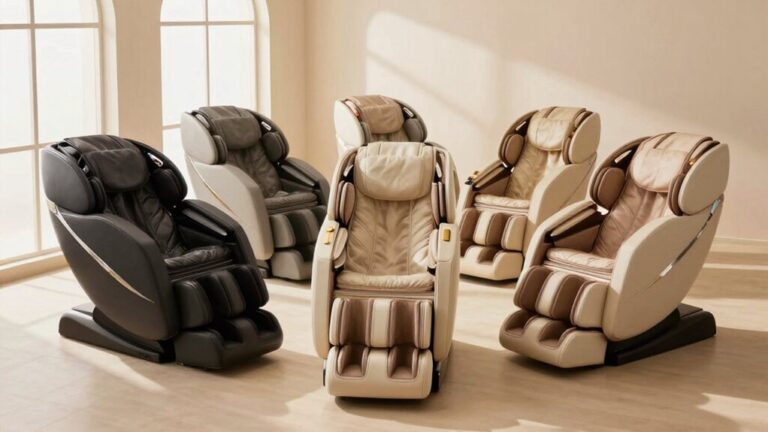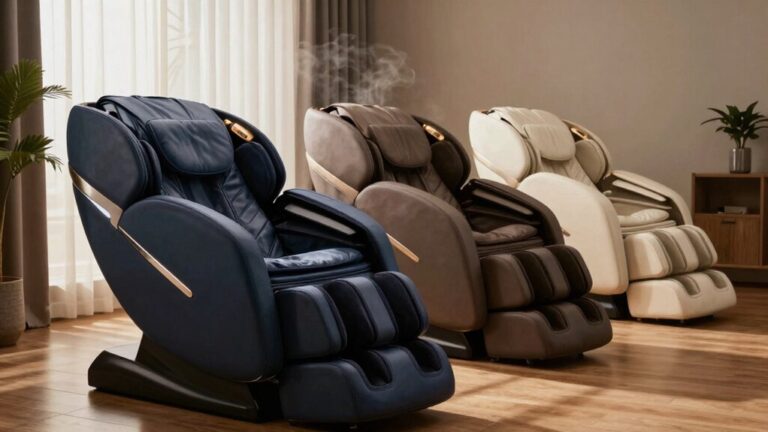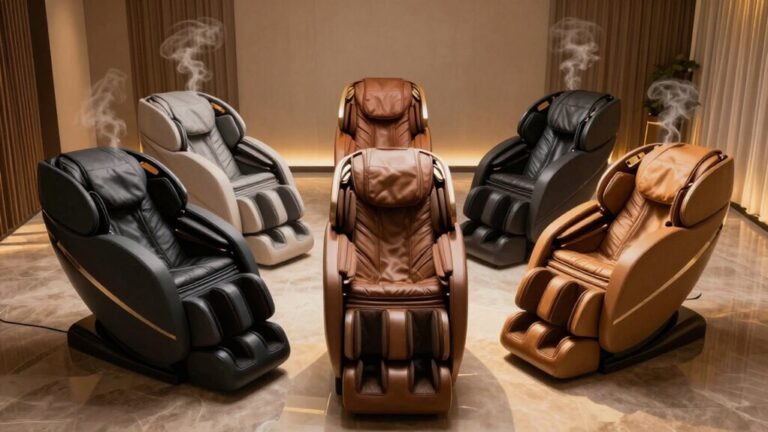
You’ll find that Osaki manufactures roughly 90% of its massage chairs in China through top-tier factories, guaranteeing competitive pricing without compromising quality. The company reserves its premium models for Japan-based production at Fuji Medical Instruments, Japan’s oldest massage chair producer. Taiwan accounts for approximately 10% of Osaki’s supply chain, providing components and non-critical parts. This tri-regional approach ascertains you’re getting industry-standard manufacturing practices backed by rigorous quality controls across all production facilities. The specifics of how these operations coordinate reveal deeper insights into what drives Osaki’s durability standards.
Primary Manufacturing in China: The Heart of Osaki Production
The vast majority of Osaki’s massage chair production occurs in China, with approximately 90% of the company’s entire product line manufactured there. You’ll find that top-tier Chinese factories like Foshan Doshower Sanitary Ware Co., Ltd. and Fujian Jingtuo Health Technology Co., Ltd. handle Osaki’s best-selling models through rigorous ODM/OEM arrangements.
Texas-based Osaki headquarters maintains strict production oversight, ensuring factory conditions meet exacting quality standards. These facilities deliver chairs within 15 workdays, demonstrating efficient operational capacity. Chinese manufacturing enables you to access premium Osaki models at competitive pricing while maintaining durability metrics showing 2-5% failure rates and approximately 10-year lifespans. This strategic positioning leverages advanced Chinese industrial engineering capabilities, resulting in the OS-HighPointe 4D and comparable premium offerings. Models like the Osaki AmaMedic Hilux feature 4D massage technology that exemplifies the advanced capabilities produced through these manufacturing partnerships. Premium Osaki chairs incorporate SL/L-Track design spanning extended lengths for comprehensive neck-to-thigh coverage. For consumers interested in experiencing these products firsthand, authorized dealers and showrooms provide opportunities to test various Osaki models before making a purchase decision. Unlike some competitors in the wellness industry, Osaki’s manufacturing approach differs from specialty vendors that distribute multiple branded product lines. Like other wellness product leaders, Osaki prioritizes luxury design alongside functionality in their manufacturing approach. The remainder of Osaki’s product portfolio comes from Taiwan or Japan, providing alternative sourcing options for consumers seeking diversified manufacturing origins.
Japan-Made Excellence: Premium Models and Superior Quality
While China dominates Osaki’s manufacturing footprint, Japan-made models represent the company’s pinnacle offering, combining heritage craftsmanship with cutting-edge engineering. You’ll find these premium chairs manufactured by Fuji Medical Instruments, Japan’s oldest massage chair producer, who pioneered the first commercial roller track technology. Models like the Osaki-JP Premium 4S showcase world class engineering proficiency through 4D massage mechanisms, intelligent voice control, and advanced body-scan technology. Japanese craftsmanship expertise manifests in rigorous quality controls and extreme durability specifications. The Osaki JP-Nexus 4D exemplifies this commitment, featuring deep calf kneading and quiet operation at competitive $6,999 pricing. Premium models across both regions incorporate luxurious features like heated jade cores and Bluetooth speakers for enhanced wellness experiences. Like leading competitors such as Ceragem, top-tier massage chairs now feature personalized body scanning technology that customizes treatments to individual spinal curvature. The advanced 3D massage mechanism with multi-axis rollers represents a key technological advantage in premium Osaki offerings. Japanese-made chairs distinguish themselves through innovative features including zero gravity recline positioning that enhances therapeutic benefits during treatment sessions. Many Japanese models integrate AI health monitoring capabilities that detect tension, stress, and fatigue for truly customized massage experiences. Japanese and American chairs demonstrate superior longevity, with 15+ year lifespans and less than 1% failure rates compared to Chinese alternatives. You’re investing in proven reliability—the Osaki-JP Premium 4S ranks as Japan’s #1 selling massage chair, backed by extensive warranties ensuring longevity and performance excellence.
Taiwan’s Role in Osaki’s Supply Chain
Taiwan accounts for approximately 10% of Osaki’s manufacturing footprint, filling a strategic niche between Japan’s premium production and China’s dominant manufacturing capacity. You’ll find emerging Taiwanese technology integrated into select models like the TW-Chiro, which features 3D body scanning and advanced massage protocols including wavelet, tapping, and kneading functions.
Taiwan supplies non-critical components for hybrid assembly processes, reducing costs without compromising quality. You benefit from robust quality assurance protocols that complement Chinese manufacturing efficiency. This approach mirrors industry standards—95% of US massage chairs originate from China, with Taiwan serving as a secondary source for cost-effective component sourcing. Similar to how premium models like the ET-300 Jupiter with 3D L-track offer advanced features, Taiwanese manufacturers contribute specialized technologies that enhance overall product performance. The L-Track system found in flagship models demonstrates how component integration across multiple regions creates comprehensive relaxation solutions. OSIM’s advanced innovations, such as AI Stress BioSensor technology, exemplify how international manufacturing partnerships drive wellness solutions forward. For complex repairs like controller replacements, Osaki recommends professional assistance to ensure safety and compatibility. When troubleshooting issues such as control flashing errors, users should follow systematic reset procedures involving disconnection and reconnection of chair components. Osaki’s commitment to providing unparalleled relaxation experiences ensures that component sourcing decisions prioritize customer satisfaction alongside manufacturing efficiency.
You’re fundamentally receiving a diversified Asian supply chain strategy that leverages Taiwan’s engineering capabilities while maintaining Osaki’s commitment to quality standards across its product portfolio.
Understanding the Industry Standard for Massage Chair Manufacturing
By understanding how Osaki sources components across Asia, you’re better positioned to appreciate why industry standards exist—they guarantee that regardless of where a massage chair’s parts originate, the final product meets consistent safety and performance benchmarks.
The international regulatory landscape demands compliance across multiple jurisdictions. You’ll encounter Chinese National Standards grading systems, Japanese medical device classifications, and US safety protocols simultaneously. This multi-national production model requires manufacturers to navigate ISO 13485 certifications, CE marking requirements, and UL compliance standards. Leading brands like Osaki and Human Touch both maintain quality ratings that reflect their adherence to these rigorous international requirements. Premium Korean models such as the Bodyfriend Quantum demonstrate how luxury manufacturers integrate Bang & Olufsen speakers and genuine leather upholstery while maintaining strict compliance standards.
You’re looking at rigorous durability testing protocols—static load assessments, vibration measurements, and acoustic evaluations capped at 60dB noise limits. These standards aren’t optional; they’re foundational requirements ensuring every Osaki chair delivers consistent quality regardless of manufacturing location or component sourcing. Advanced massage chairs integrate microprocessors that coordinate multiple therapeutic components to maintain performance consistency across different production facilities. Top-performing models like the Snailax Full Body Massage Chair Pad exemplify how effective shiatsu and roller functions contribute to chronic pain relief across diverse product categories. Premium massage chairs featuring S- and L-track systems provide comprehensive coverage from neck to glutes for enhanced therapeutic benefits. The revised GB/T 26182-2022 standard, effective February 1, 2023, introduced 4D massage movement technology with spatial trajectory control to establish new benchmarks for massage chair innovation and performance across the industry.
Quality Control and Sourcing Standards Across All Osaki Models
Because Osaki maintains direct oversight of manufacturing facilities in China and Japan, you’re assured that every component—from aerospace-grade aluminum frames to precision-engineered roller systems—undergoes rigorous verification before assembly. Component quality control protocols identify failure points pre-consumer release, ensuring materials maintain performance over extended lifespans.
Heavy-duty components reinforce structural strength through reinforced motors and multi-layered cushioning designed for extensive usage. Enhanced stitching patterns reduce wear on stress points, maximizing durability. Advanced stress-testing protocols simulate years of regular usage to validate long-term performance reliability across all chair models. Like leading massage chair brands that utilize machine learning for personalized sessions, Osaki incorporates adaptive technology to optimize user experience based on individual preferences and usage patterns. Osaki’s engineering team has integrated split-track designs to ensure precise targeting of the neck, back, calves, and feet during massage sessions. Osaki’s approach to ergonomic design aligns with industry standards that prioritize zero-gravity reclining for optimal spinal alignment during therapeutic sessions. Premium zero gravity massage chairs offer clinical-level relief for back pain through spine-unloading precision that Osaki’s engineering team has integrated into their design specifications. Osaki’s commitment to quality is reflected in its 4.5/5 quality rating among premium massage chair manufacturers.
Your investment’s protection comes through all-encompassing warranty coverage details: standard 3-year structural warranty with first-year no-cost repairs and in-home labor. Coverage extends to replacement parts for two years, with extension options up to five years available. Regional repair center partnerships provide convenient service within 48 US states.